Revolutions
Ideas, in 1776, travelled on the same ships as sugar and tobacco. A French translation of The Wealth of Nations was sent to Benjamin Franklin in Philadelphia within two years of its publication. John Adams recommended Smith to his son as one of the “set of Scotch writers” essential to understanding politics and morality. Alexander Hamilton drew directly on The Wealth of Nations in the Federalist Papers. The book that Adam Smith wrote holed up in his childhood home in a small coastal town in Fife was, within a decade, shaping constitutions on the other side of the world.
Learn more
- The Black Jacobins, C L R James
- Adam Smith’s American Revolution, Dan Klein – IEA Interview
- Black Liberty Matters, Jacob T. Levy
- 1820: Scottish Rebellion, Kevin Gallagher , Ed. Gerard Carruthers , Illus. Craig Lamont et al
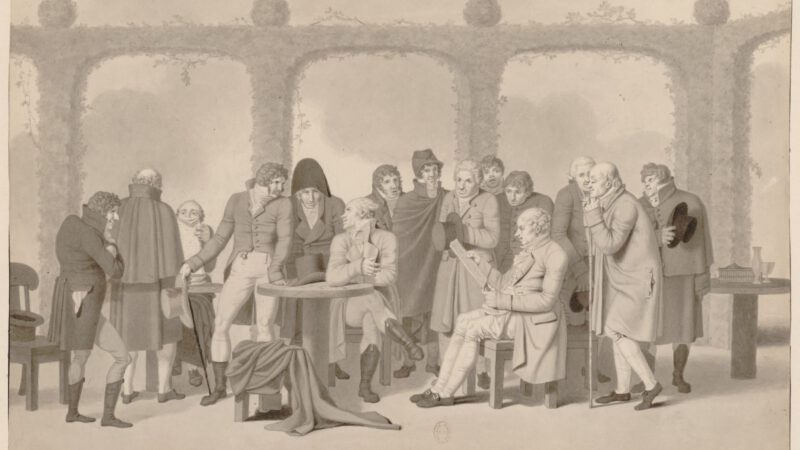
This was not coincidence. The late eighteenth century was an age in which the circulation of new ideas — about natural rights, legitimate government, and the proper relationship between rulers and the ruled — was itself a revolutionary force. The same Enlightenment network that produced Smith also produced Voltaire, Rousseau, Montesquieu, and the Abbé Raynal, whose critique of European colonialism would later be credited by Toussaint Louverture as an influence on the Haitian Revolution. These thinkers read each other, corresponded with each other, and — crucially — were read by people far beyond the universities and salons where they first circulated. The cheap print revolution of the eighteenth century made this possible: The Wealth of Nations was itself part of the first wave of popular non-fiction books, texts written for an educated general readership rather than a scholarly elite, published in an age when mass printing was still new enough to feel miraculous.
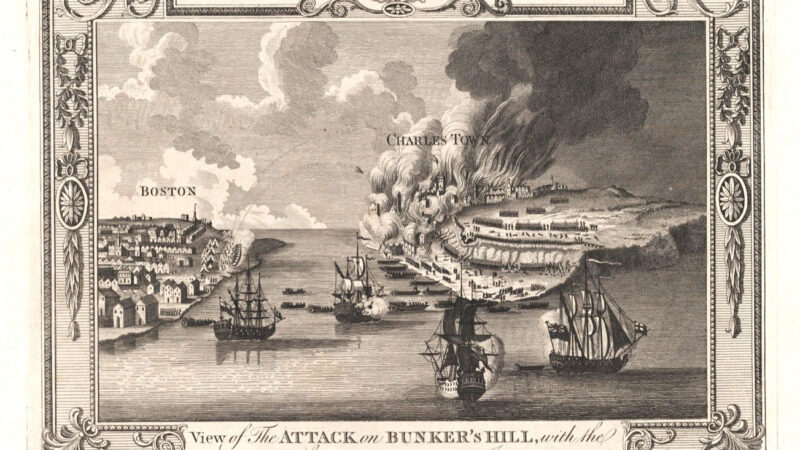
The revolutionary stirrings of 1776 were multiple and connected. The American Revolution — formally declared on 4 July 1776, just months after The Wealth of Nations appeared — was partly a free trade argument: a protest against taxation without representation, against the East India Company’s tea monopoly, against an economic system rigged for British merchants at the colonists’ expense. But it was also a revolution led by enslavers, men who owned plantations or profited from the manufacture of slave-made goods, who asserted their right to “life, liberty and property,” and included slaves in the latter.
In Ireland, the same arguments were being made by the Cork Volunteers, who drilled in market squares beneath banners reading “Free Trade or This” and looked to the American example with open admiration; they would force limited Irish legislative independence by 1782. In France, the monarchy that bankrolled the American Revolution while running the most profitable slave colony in the world was accumulating the internal contradictions that would explode in 1789.
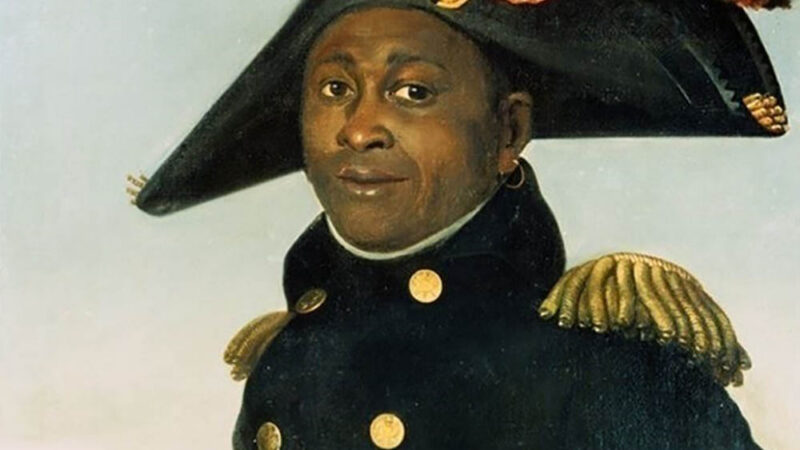
Beyond the century’s horizon, further revolutions were gathering. The Haitian Revolution of 1791–1804 — the only successful slave revolution in history — turned the Enlightenment’s language of liberty directly against the planters who had used it to justify their own freedom while denying it to others. The Bolivarian revolutions of the early nineteenth century swept through Latin America, ending abruptly the power of Portugal and Spain, who had dominated the first age of European imperialism.
Soon anti-monarchist movements convulsed Europe. Each of these drew, in different ways, on the ideas that were in circulation in 1776: that legitimate government requires consent, that monopoly is a form of tyranny, and that people will not remain in chains — economic, political, or literal — forever. The world Smith was describing was not simply a world of trade. It was a world on the edge of transformation.